
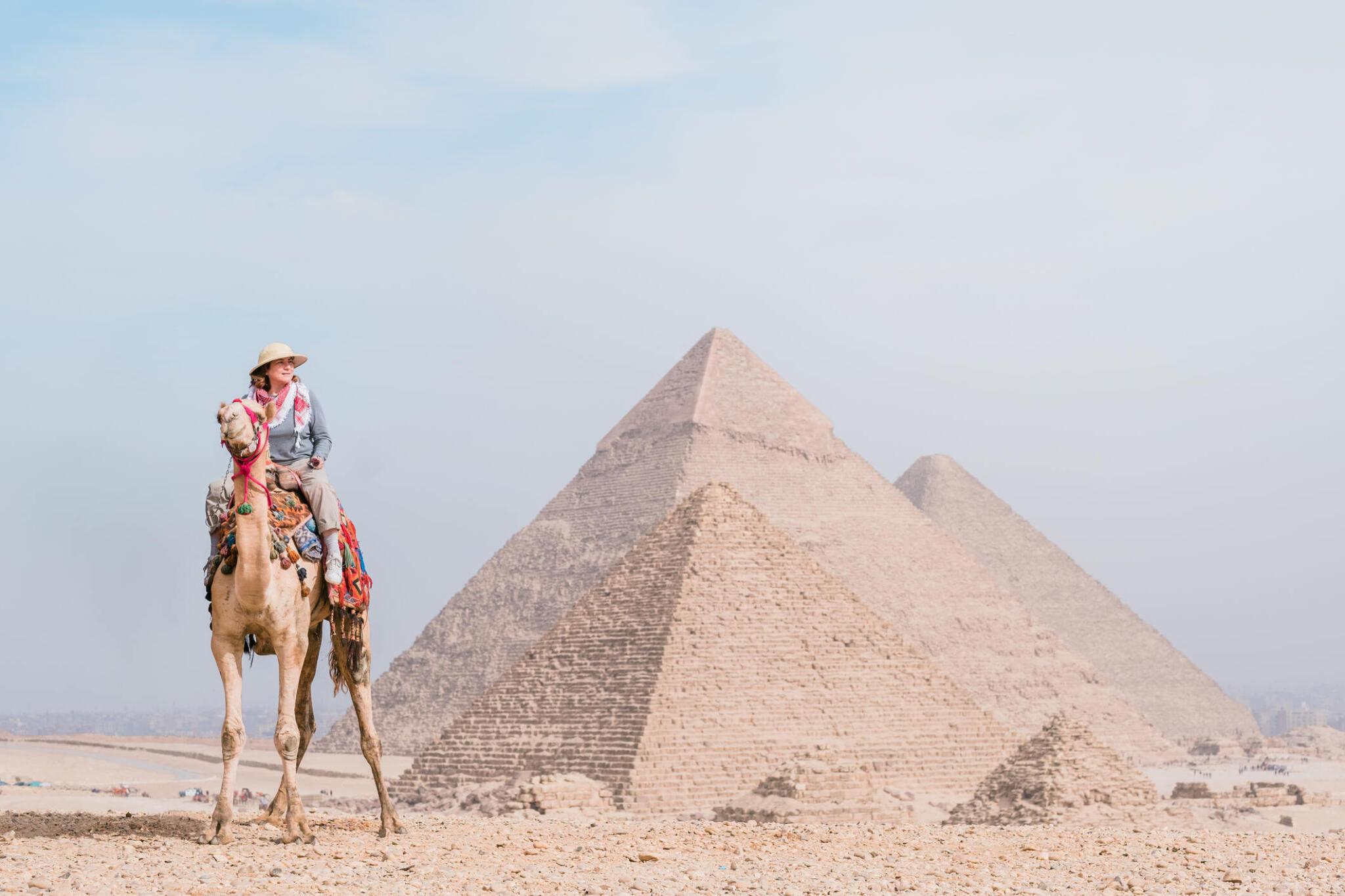
Standing at the edge of the Giza Plateau, where the bustling streets of modern Cairo abruptly give way to golden desert sands, one sight commands complete silence: the Pyramids of Giza. For over 4,500 years, these colossal limestone monuments have captivated emperors, historians, poets, and modern globetrotters alike.
As the only surviving structure of the original Seven Wonders of the Ancient World, the pyramids are far more than a backdrop for a bucket-list photograph. They are a testament to human ambition and an architectural puzzle that continues to defy easy explanation. Why do millions of travelers flock to Egypt year after year to stand in their shadow? The answer lies in a rare intersection of mystery, scale, and a completely transformed modern visitor experience.
1. Architectural Mastery That Defies Time
No matter how many documentaries you watch, nothing prepares you for the sheer physical scale of the Great Pyramid of Khufu. Originally standing at 146.6 meters (481 feet), it held the title of the tallest man-made structure on Earth for nearly four millennia.
- Staggering Material Volume: The Great Pyramid consists of approximately 2.3 million stone blocks, each weighing between 2.5 and 15 tons, with massive granite slabs in the King’s Chamber tipping the scales at up to 80 tons.
- Astronomical Precision: Built without modern compasses, cranes, or iron tools, the four sides of Khufu’s pyramid are aligned to the true cardinal points (North, South, East, West) with an error of less than one-fifteenth of a degree.
- The Triad Harmony: Alongside the Pyramid of Khafre (recognizable by the smooth original casing stones still clinging to its peak) and the smaller Pyramid of Menkaure, the complex forms a geometric layout across the desert floor that mirrors the belt of the Orion constellation.
2. Unsolved Mysteries and the Human Connection
Travelers are drawn to places that challenge our understanding of the past. Even with non-invasive cosmic-ray muon scans—which recently revealed hidden corridors inside the Great Pyramid—archaeologists still debate the exact ramp configurations and engineering mechanics used to raise the stones.
Beyond the engineering lies a deeply human story. Archaeological excavations of the nearby Workers' Village debunked the long-held myth that the monuments were built by slaves. Instead, travelers walk the grounds where tens of thousands of skilled Egyptian artisans, bakers, engineers, and seasonal laborers lived, ate prime cuts of beef, and received medical care—united in a national project to bridge the earthly realm with eternity.
Guarding it all is the enigmatic Great Sphinx of Giza, carved from a single ridge of limestone, gazing permanently toward the rising sun.
3. A Reimagined Experience: The Grand Egyptian Museum & Plateau Upgrades
Visiting the Pyramids of Giza has undergone its biggest transformation in a century. The chaotic, high-friction logistics of the past have been replaced by a streamlined, world-class heritage experience.
- The Grand Egyptian Museum (GEM): Located just two kilometers from the pyramids, the fully opened Grand Egyptian Museum creates a seamless visual and historical bridge to the plateau. Its towering glass facade frames the pyramids directly in your sightline while housing over 100,000 artifacts—including all 5,398 treasures from King Tutankhamun’s tomb and Khufu’s relocated, intact Solar Boat.
- Eco-Friendly Plateau Shuttles: Gas-guzzling tour buses and aggressive vehicle traffic around the monuments have been replaced by quiet, hop-on-hop-off electric shuttle buses connecting the visitor center, the Panorama Viewpoint, the three pyramids, and the Sphinx.
- Elevated Dining with a View: Today’s travelers can unwind at upscale restaurants directly on the plateau or on the rooftops of the GEM, sipping Egyptian hibiscus tea as the late afternoon sun turns the limestone monuments a deep amber gold.
4. Essential Tips for Visiting the Pyramids of Giza
To turn a good trip into a transformative journey, smart planning is essential. Keep these practical tips in mind when building your Cairo travel itinerary:
| Travel Factor | Expert Recommendation |
|---|---|
| Best Time of Year | October through April offers mild desert temperatures (20°C–26°C / 68°F–79°F), ideal for exploring on foot. |
| Best Time of Day | Arrive at 7:00 AM–8:00 AM right at opening to beat tour crowds and harsh midday glare, or visit in the late afternoon for golden-hour photography at the Panorama Viewpoint. |
| Going Inside a Pyramid | Requires a separate add-on ticket. Skip if you are claustrophobic (the climb is narrow and warm). Pro tip: Khafre’s or Menkaure’s interior offers a similar thrill to Khufu's with shorter lines and lower ticket costs. |
| Ticketing & Guides | Book Grand Egyptian Museum and Giza Plateau combo tickets online in advance. Hiring a licensed Egyptologist guide brings the bare stone chambers and hieroglyphs to life. |
Frequently Asked Questions
Can you still go inside the Pyramids of Giza?
Yes, travelers can go inside the Great Pyramid of Khufu, as well as the pyramids of Khafre and Menkaure (on a rotating maintenance schedule). Entry requires a separate ticket in addition to general Giza Plateau admission. Inside, visitors climb a narrow, sloped shaft to reach the ancient granite burial chamber.
How much time do you need at the Giza Pyramids and GEM?
Plan for a full day to experience both properly. Allocate 3 to 4 hours in the morning to explore the Giza Plateau, the Great Sphinx, and the Panoramic Viewpoint, followed by 4 to 5 hours in the afternoon at the climate-controlled Grand Egyptian Museum right next door.
What is the best viewpoint for Pyramid photos?
The Panorama Viewpoint—accessible via the plateau's electric shuttle system—is the premier spot for photography, allowing you to capture all three pyramids aligned against the open Sahara desert in a single frame.
Experience the Wonders Firsthand
Trends in global travel come and go, yet the Pyramids of Giza remain the ultimate pilgrimage for the curious soul. Standing before stones laid down at the dawn of human civilization doesn't just connect you to ancient Egypt—it shifts your perspective on time itself.
Explore Our Private Cairo & Giza Tour Packages →
Book your customizable itinerary with a certified Egyptologist and skip-the-line access to the Giza Plateau and Grand Egyptian Museum.